Choosing Between a Dental Implant and a Bridge in Plainfield, NJ
Quick Answer: Dental implants and bridges both replace a missing tooth, but they work in very different ways. An implant is a titanium post placed in the jawbone that acts as an artificial root, while a bridge anchors a replacement tooth to the natural teeth on either side of the gap.
Losing a tooth, whether from decay, an injury, or an extraction, leaves more than just a gap in your smile. Over time it can shift how you bite, how neighboring teeth sit, and even the shape of your jaw. If you're searching for a dentist near me in Plainfield, NJ to weigh your options, the two most common paths patients consider are dental implants and dental bridges, and each one solves the problem a little differently.
How a Dental Implant Works
An implant starts with a small titanium post placed directly into the jawbone, where it functions as an artificial tooth root. Over the following months, the bone fuses to the post in a process called osseointegration. Once that's complete, a custom crown is attached on top, restoring the tooth's full function and appearance. At Rosa Dental, this process is planned around each patient's individual bone density and healing timeline rather than treated as a one-size-fits-all procedure.
Because the implant stimulates the jawbone the way a natural tooth root does, it helps prevent the bone loss that tends to occur in the area of a missing tooth. This is one of the main reasons implants are often considered the more biologically stable long-term option.
How a Dental Bridge Works
A bridge takes a different approach. Instead of replacing the root, it replaces the visible tooth by anchoring a false tooth (called a pontic) to the teeth on either side of the gap. Those neighboring teeth, known as abutment teeth, are shaped down slightly so crowns can be placed over them, and the pontic sits between the two crowns as one connected piece.
A bridge doesn't require surgery or a healing period the way an implant does, which is part of why some patients prefer it. But it also means the two supporting teeth take on extra work, and the bone under the missing tooth isn't stimulated the way it would be with an implant.
Factors That Actually Determine the Right Choice
There isn't a single right answer for every patient, the decision generally comes down to a few specific factors:
- Jawbone density. Implants require enough healthy bone to anchor into. If bone loss has already occurred in the area, a bone graft may be needed before an implant can be placed, which adds time to the process.
- Condition of the neighboring teeth. If the teeth next to the gap are already weakened, decayed, or have large fillings, a bridge might actually be a practical way to protect them with a crown anyway. But if those teeth are healthy, many patients prefer not to reshape them just to support a bridge.
- How long you want the solution to last. Implants are built to be a long-term, standalone solution. Bridges can also last many years with proper care, but because they depend on the supporting teeth, those teeth need to stay healthy for the bridge to hold up.
- Timeline. A bridge is typically completed faster, since it doesn't require the healing period implants need to integrate with the bone. If time is a bigger factor for you than long-term bone preservation, that's worth discussing directly.
- Overall oral and general health. Certain health conditions or habits can affect implant healing. This is something we'd walk through with you directly, since it varies significantly from patient to patient.
What an Evaluation Looks Like
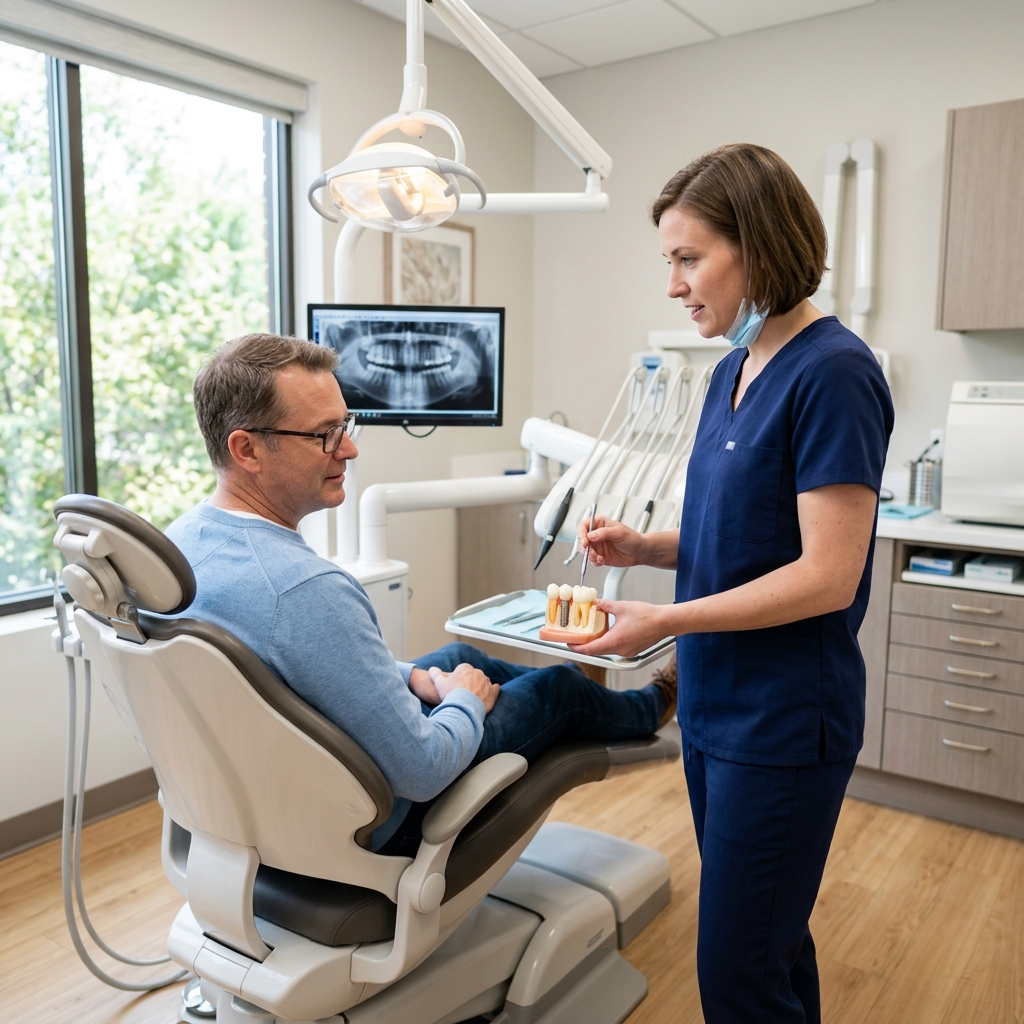
At Rosa Dental, before recommending either option, we'll typically look at the health of the surrounding teeth, take imaging to assess bone density in the area, review your medical history, and talk through your goals, whether that's speed, longevity, cost predictability, or simply wanting the option that requires the least ongoing maintenance. Digital imaging plays a big role here, since it shows details about the jawbone that aren't visible during a regular exam.
What to Expect With Either Option Long-Term
Both restorations are designed to last many years with proper care, but they age differently. A bridge relies on the health of its anchor teeth, so if one of those teeth develops decay or gum disease later, it can affect the whole bridge. An implant functions independently of neighboring teeth, so its long-term outlook depends mostly on gum health around the implant site and regular checkups. Neither option removes the need for consistent brushing, flossing, and professional cleanings.
Call to Action
If you're trying to decide between an implant and a bridge, the most reliable next step is an exam rather than guessing based on general information, since bone density and the condition of your other teeth play a bigger role than most patients expect. Rosa Dental in Plainfield, NJ can evaluate your specific situation and walk you through which option fits. You can reach out to schedule a consultation or call 908-622-4200 to get started.
Frequently Asked Questions
1. Is a dental implant more painful than getting a bridge?
Both involve some discomfort. Implant placement is a minor surgical procedure, so there's a healing period, though most patients manage it with over-the-counter pain relief. A bridge doesn't involve surgery, but reshaping the anchor teeth can cause some sensitivity for a few days afterward.
2. Can I switch from a bridge to an implant later if I change my mind?
In many cases, yes, though it depends on the condition of the teeth that were used as bridge anchors and how much bone remains in the area. This is something your dentist can evaluate directly.
3. Do I need a bone graft before getting an implant?
Only if imaging shows there isn't enough bone density to support the implant. This is something we'd assess directly before recommending a treatment plan.
4. Is one option more affordable than the other?
Bridges typically have a lower upfront cost than implants, though implants often prove more cost-effective over time since they don't rely on the ongoing health of neighboring teeth. We'll walk you through pricing and what your insurance covers for both options during your consultation.
5. Can a bridge or implant look like my other natural teeth?
Yes, both options are custom-shaded and shaped to blend in with your existing teeth. Most patients find that once healing is complete, it's difficult for others to tell which tooth was replaced.